How to Become a UGC Creator (No Followers Needed)
How to become a UGC creator with no followers: pick a niche, film sample videos on your phone, build a portfolio page, set packages and pitch brands.
 Oliver BennettE-commerce Blogger covering creator businesses and digital products·Updated · 6 min read
You can learn how to become a UGC creator without a big following, a studio or a marketing degree. Brands pay UGC (user-generated content) creators for the videos and photos, not for their audience. The brand posts the content on its own channels or runs it as an ad. What you need is a phone, a few sample videos and a place to show them: a portfolio page in your link in bio.
Photo: Detail .co on Unsplash
We looked at the pages Google ranks first for this search on 30 October 2026. The #2 result is an agency's sign-up form, and a Reddit thread from a beginner who had tried several side hustles sits at #4. Plenty of advice, very little order. Below is the order we would follow, from zero to the first paid brief.
How to become a UGC creator: the short answer
- Understand the job: you make content brands use, you do not post it for them.
- Pick one or two niches you already know as a buyer.
- Set up a phone, light and sound you can repeat.
- Make 3 to 5 sample videos with products you own.
- Build a portfolio page with your best videos at the top.
- Write your rates and packages down before anyone asks.
- Pitch brands and apply to UGC platforms every week.

Photo: JOVS Beauty on Unsplash
Step 1: Understand what the job is
A UGC creator makes short videos and photos that look like a real customer made them. Common formats are unboxings, product demos, honest reviews, "three reasons I switched" videos and voice-over screen recordings for apps.
The difference from influencing is who posts. An influencer is paid to post to their own followers. A UGC creator hands the files over, and the brand decides where they run. That is why follower count matters so little here, and why your sample videos matter so much.
| UGC creator | Influencer | |
|---|---|---|
| Who posts | The brand, on its channels or as an ad | The influencer, to their own followers |
| What the brand pays for | The videos and photos | Reaching the audience |
| Do followers matter? | Very little: your samples matter | Yes |
Step 2: Pick one or two niches
Brands hire creators who look like their customers. Pick niches where you are already a buyer: skincare, fitness, pets, parenting, home, tech, food or apps. You know the problems, the words and the products.
Two niches is a good start. One is too narrow while you learn; five makes your portfolio look random.
Step 3: Set up gear you can repeat
You do not need a camera. Most UGC is filmed on a phone because it is meant to look like a customer filmed it.
- Phone: the rear camera, cleaned, at 1080p or 4K and 30 frames per second.
- Light: a window in daylight, facing you. Add a small ring light for evenings.
- Sound: a clip-on microphone. Viewers forgive soft video; they leave when the sound is bad.
- Editing: CapCut or the editor inside your phone. Cut the pauses, add captions.
The goal is a setup you can repeat in ten minutes, so every video in your portfolio looks like it came from the same creator.
Step 4: Make 3 to 5 sample videos
Brands want to see the work before they pay for it. Make spec videos with products you already own. Nobody needs to send you anything.
Cover different formats so a brand can picture you in theirs:
- A hook-first review (15 to 30 seconds): the problem, the product, the result.
- An unboxing with honest first reactions.
- A demo showing the product in use, step by step.
- A voice-over with b-roll, for brands that want hands and product only.
- Three different hooks for the same video. Brands test hooks in ads, so offering them shows you know the job.
Keep each video short and vertical. Put captions on all of them; many people watch with the sound off.
Step 5: Build a portfolio page
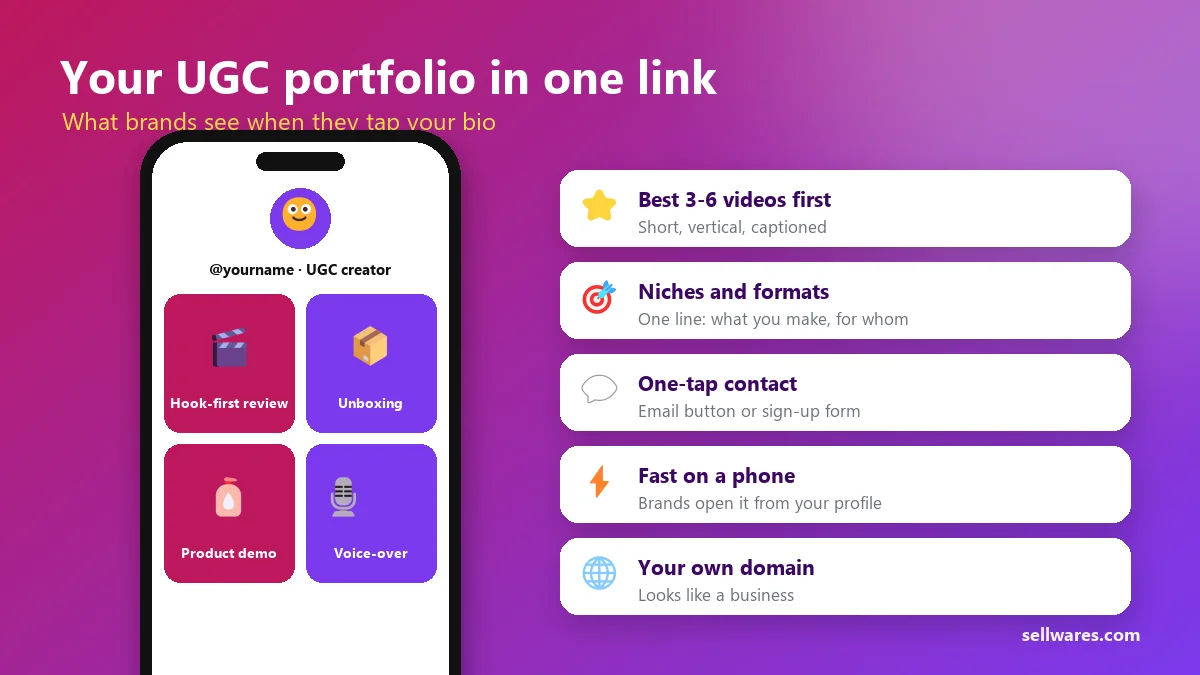
Your portfolio is the link you send in every pitch and the link brands find in your bio. It should load fast on a phone and answer three questions in seconds: what you make, who you make it for, and how to hire you.
What to put on it:
- Your best 3 to 6 videos, best first.
- Your niches and formats in one line.
- Your packages and starting rates, or "rates on request".
- A contact button or an email sign-up.
A link in bio page works well as a portfolio because it is built for phones. On Sellwares the Bio for a portfolio template puts your work in a grid first and Bio with a video puts one film at the top. Both are free, and you can use your own domain on a paid plan.
Step 6: Set your rates and packages
Decide your prices before a brand asks, so you answer in one email instead of three.
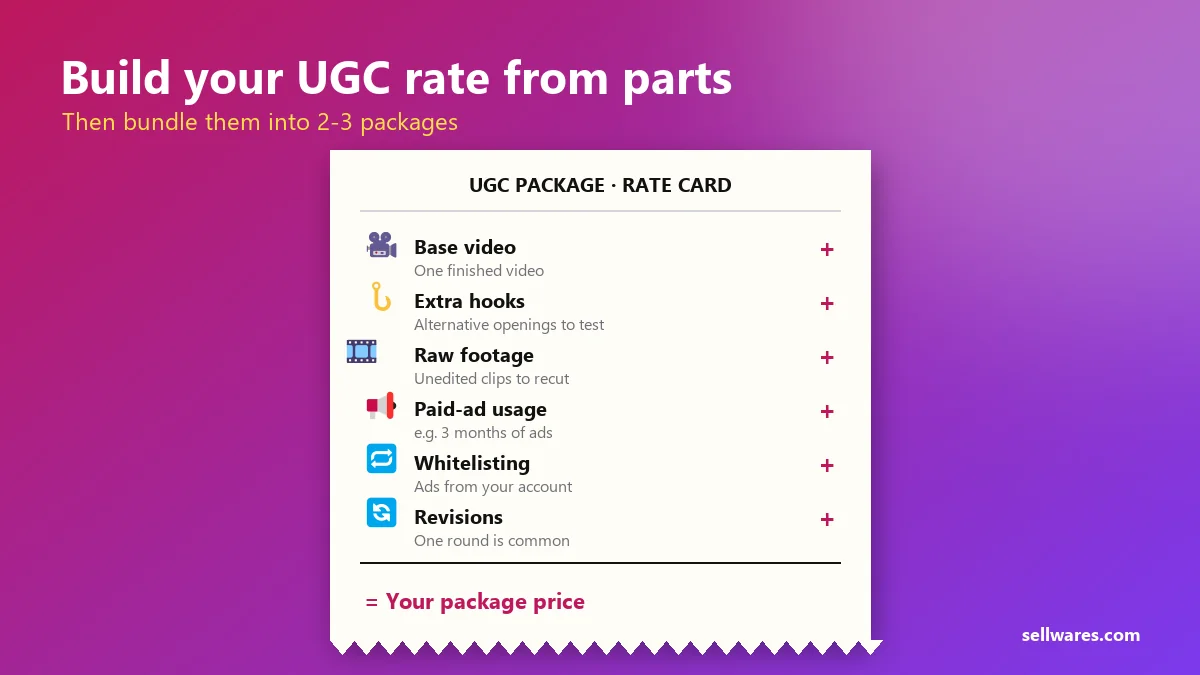
Rates vary a lot by niche, experience and usage. Instead of copying someone else's number, build your rate from parts:
- Base price per video: what one finished video is worth to you.
- Extra hooks: a smaller fee per alternative opening.
- Raw footage: a fee for unedited clips the brand can recut.
- Usage rights: the brand's right to run your video as a paid ad for a set time, such as 3 months. Paid ad use is worth more than organic posts, so it costs more.
- Whitelisting: the brand runs ads from your social account. Price it separately and for a set time.
Then bundle them into two or three packages, such as one video with three hooks, or three videos with raw footage and 3 months of ad use. Packages are easier to say yes to than a list of prices.
Step 7: Find brands and pitch every week
There are two routes, and you should use both.
UGC platforms. Sites like Billo, Insense and Sideshift list briefs from brands looking for creators. Apply with your portfolio link. Competition is high, so a tidy portfolio and fast replies matter.
Direct pitching. Pick brands you already buy from. Look for ones running ads with creator-style videos; they already pay for UGC. Send a short email or DM:
Hi [name], I make short product videos for [niche] brands. I bought [product] last month and filmed a sample review: [link]. I can make three versions with different hooks for your ads. My portfolio and packages are here: [link]. Happy to send a quote for a first test.
Pitch ten brands a week. Most will not answer; one yes in thirty is a normal start.
Contracts, usage rights and getting paid
Before you film for a brand, agree in writing on:
- What you deliver: number of videos, length, hooks, raw files.
- Revisions: one round is common.
- Usage: organic only, or paid ads, and for how long.
- Payment: amount, due date and method. Ask for 50% up front with new brands.
If a brand pays you or sends free products and you also post about it on your own account, US rules on endorsements apply. The FTC's guide for influencers explains when and how to disclose that relationship.
What we found in the top results
We reviewed the pages Google shows first for "how to become a UGC creator" on 30 October 2026:
- An agency sign-up page ranks #2. It is a form, not a guide. Google ranks it because so many people search to apply somewhere.
- A beginner's Reddit thread ranks #4 with a single linking website. People want honest stories from creators who started recently.
- Pricing advice is thin. Most pages give a pay range and stop. Few explain how usage rights and raw footage change the price, which is where experienced creators earn more.
That is why this guide spends a whole step on packages.
Grow beyond brand deals
UGC income depends on brands. Many creators add income they control: a short guide on their niche, a template, a preset pack, or paid calls teaching other creators. You can sell digital products from the same page as your portfolio, with a 0% transaction fee.
Ready to make your portfolio page? Start free and pick a portfolio template.
Questions
How much do UGC creators make?
Pay varies widely by niche, experience and usage rights. Creators are paid per video or package, and paid-ad usage, extra hooks, raw footage and whitelisting are priced on top. Many start with a simple package and raise prices after their first testimonials.
Is creating UGC free?
Starting is nearly free: a phone, daylight, a cheap clip-on microphone and a free editing app such as CapCut. Your sample videos can use products you already own.
Do you need followers to be a UGC creator?
No. Brands pay for the content, not your audience, because they post it on their own channels or run it as ads. Your portfolio matters far more than your follower count.
What is the best UGC platform for beginners?
Platforms such as Billo, Insense and Sideshift list briefs from brands. Apply to a few with a tidy portfolio, and pitch brands you already buy from at the same time.
Is UGC still worth it?
Yes, if you treat it like a small business. Competition has grown, but brands need a steady stream of fresh videos for ads, and creators with a clear niche, fast replies and good hooks get repeat work.